











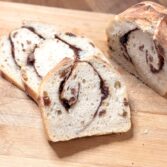
Soft Sourdough Cinnamon Raisin Bread – Naturally Fermented Vegan Loaf
Soft Sourdough Cinnamon Raisin Bread for anyone who loves the smell of cinnamon drifting through the kitchen, baking this naturally fermented vegan loaf is pure joy. While reading this recipe may take a few minutes, baking it will reward you for days. Yes, sourdough takes a little patience. But most of that time is quiet time — the dough resting while life goes on around it. Here in Sicily, that rhythm fits perfectly.
- Slow food.
- Fresh ingredients.
- Meals shared with friends.
Exactly what the Mediterranean Diet espouses as part of a healthy lifestyle.
The Right Flour for the Starter and the Bread
One of the reasons this loaf rises so beautifully and holds its cinnamon swirl so well is Manitoba flour, a high-protein, strong wheat flour from Canada. Its higher gluten content gives the dough extra structure, making it perfect for breads with add-ins like raisins and for creating a soft, tender crumb. It is the same flour If you can’t find Manitoba flour in the U.S., a great substitute is bread flour, which has a similar protein content and will give you nearly the same rise and texture. Using all-purpose flour is possible, but the loaf may be slightly less structured and the swirl a little softer — still delicious, just a touch more rustic.
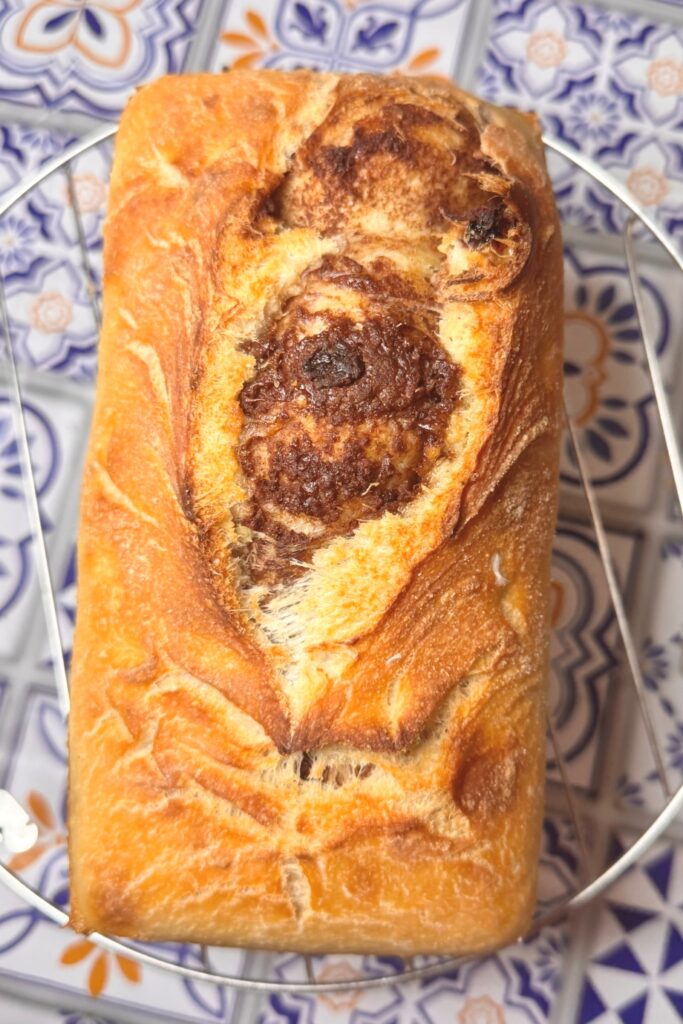
Cinnamon Bread the Star of a Simple Brunch in Sicily
This loaf is one of those breads that feels special enough for brunch but simple enough to enjoy any day of the week. Recently I hosted a small brunch at my house. Nothing elaborate — just a relaxed table with good coffee and a few dishes I love to serve to friends.
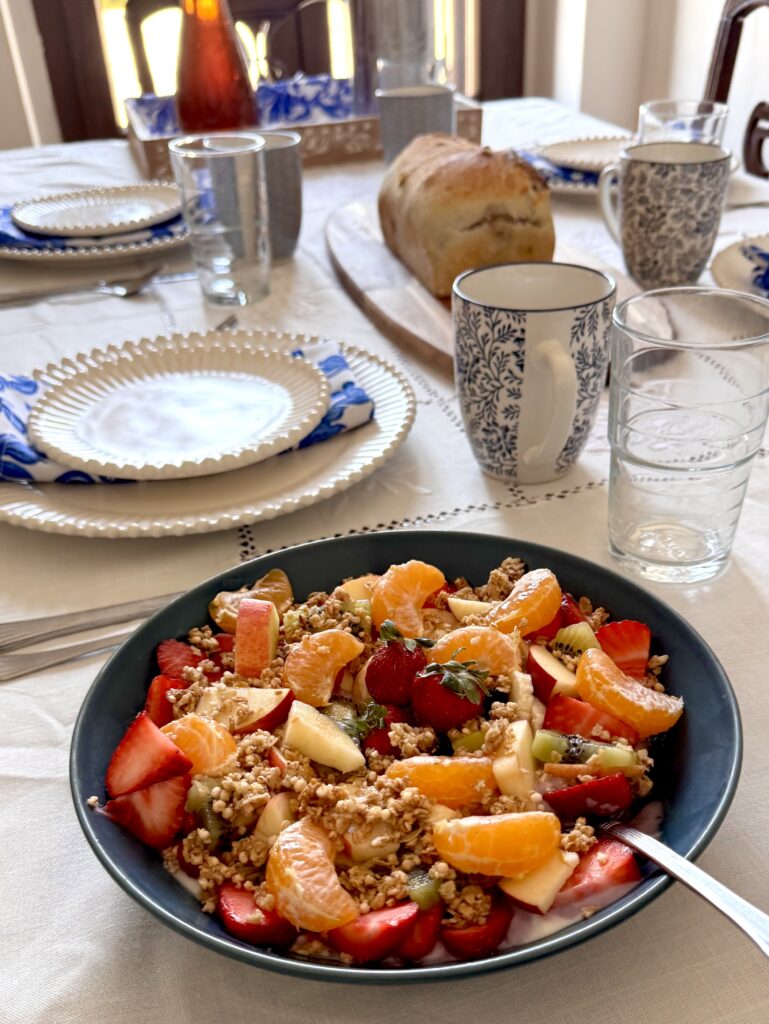
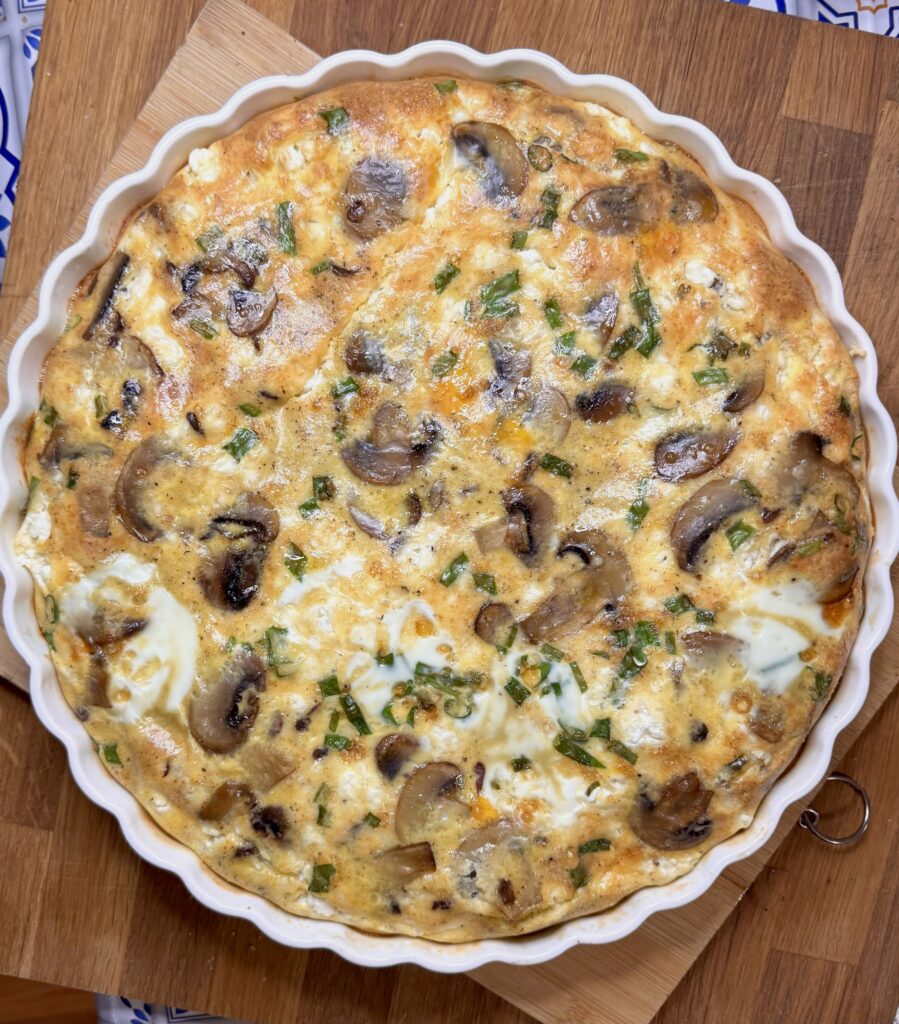
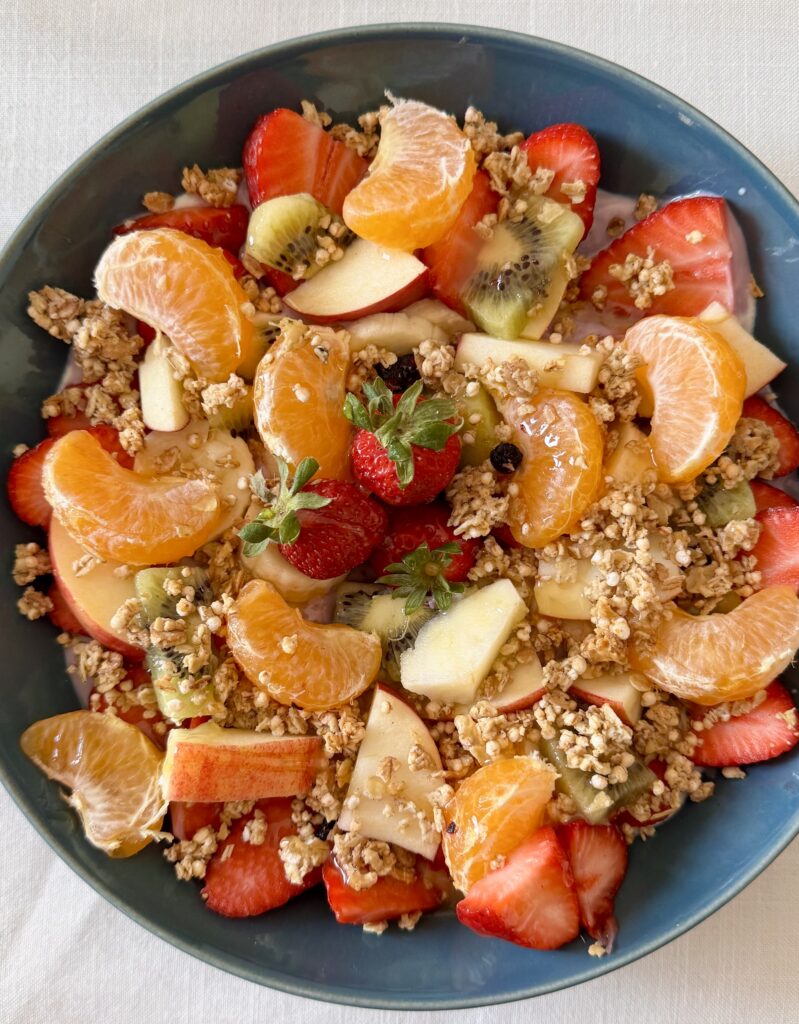
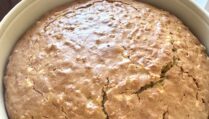
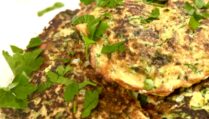
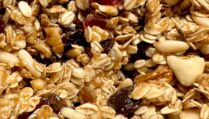
We started with an Olive Sunshine inspired Mediterranean-style yogurt bowls layered with fresh fruit and a deliciously toasted quinoa granola (recipe out soon I hope). Alongside that was the Olive Sunshine Crustless Sweet Potato Quiche, a lighter version of the classic that skips the heavy pastry crust but keeps all the flavor. I made it with Japanese white sweet potato. Living in Sicily, I have learned the food you buy guides the menu, not the other way around. Everything is seasonal, and it is available when the farmer brings it to the market.
Quiche is perfect for breakfast or lunch. I love enjoying a lovely vegetarian quiche with a side salad, a warm piece of wheat baguette, and a glass of wine during a girls’ luncheon out. Traditional quiche is delicious, but it is rarely healthy. The culprit is usually the buttery pie crust. A crustless sweet potato quiche keeps the dish light, flavorful, and Mediterranean Diet friendly. But I digress!
And of course, there was this sourdough cinnamon raisin bread.
Making this Deliciously Soft Loaf of Sourdough Cinnamon Raisin Bread
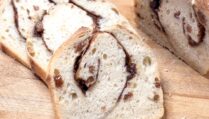
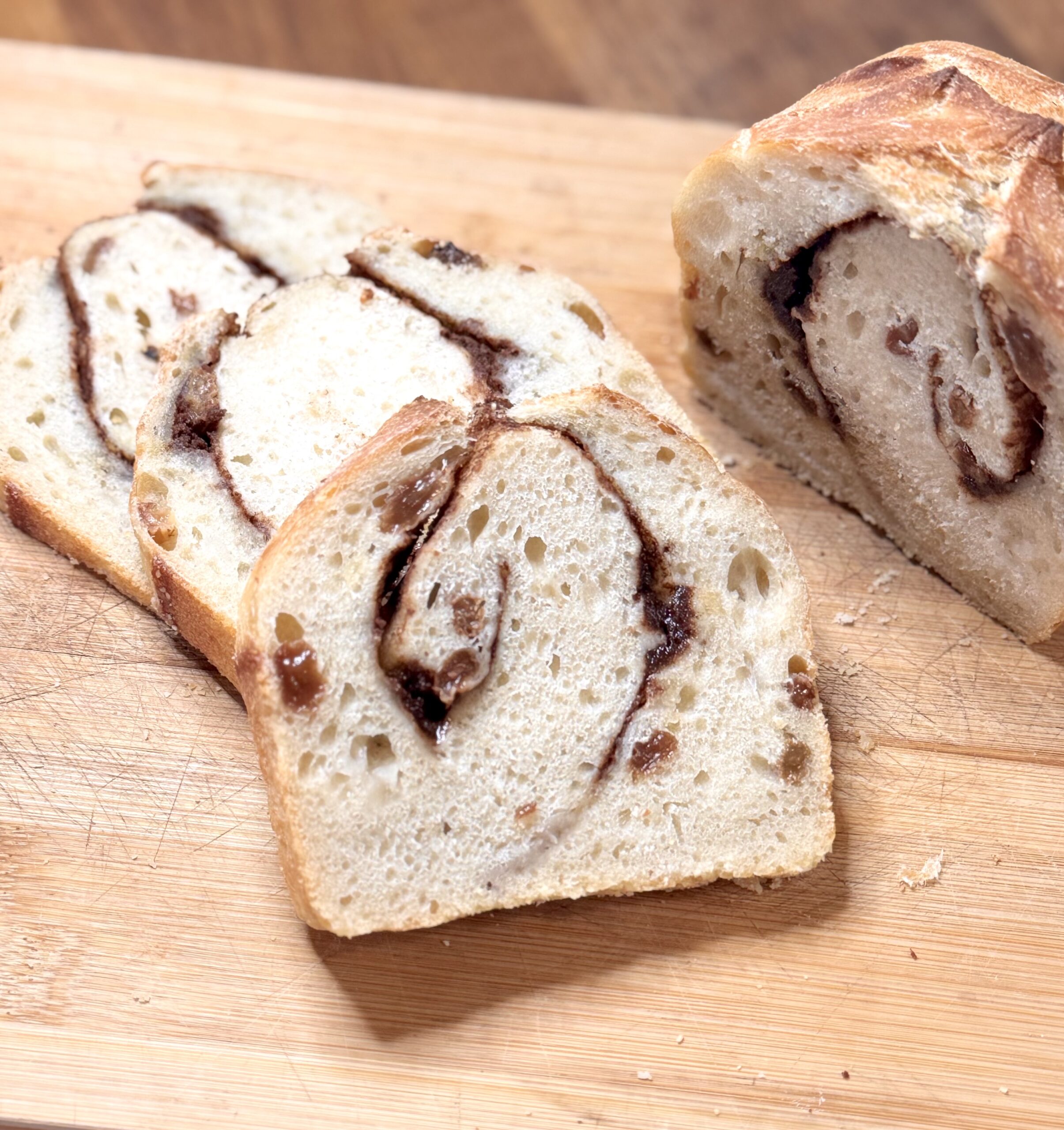
For this loaf, I like to use two simple loaf pans instead of a Dutch oven. It’s a small change that makes a big difference: the bread stays incredibly soft, the crust is tender, and it’s easy to slice for brunch or to freeze later. Using a pan also allows the cinnamon swirl to expand beautifully without sticking, giving each slice a perfect spiral. I use two 9×5 inch pans, one metal and one silicone. (See more information in the helpuf hints at the bottom of the recipe.)
When I set the loaf on the table, it was simply meant to be one small part of the meal. But as the brunch unfolded, it quietly became the star. The loaf was sliced, then sliced again, and before long only a few pieces remained.
What always amuses me at gatherings like this is how often people say they are trying to avoid bread — until a good loaf appears. When bread is made slowly, with real ingredients and natural fermentation, it has a way of winning people over. By the end of brunch, half the loaf had disappeared, and it was seriously suggested that perhaps I should start selling it. I take that as a very high compliment.
Bread is Not the Enemy
Somewhere along the way bread developed a terrible reputation. Yet throughout the Mediterranean — including here in Sicily — bread has always been part of daily life. Walk into almost any bakery in the morning and the shelves will be full of fresh loaves, and many families still buy bread daily. The difference is not bread itself. The difference is how it is made.
One of the things I appreciate most about baking sourdough bread is how gentle it can be on the digestive system.
Sourdough is naturally fermented, which means the flour, water, and starter are allowed to rest and develop over time. During this process, beneficial bacteria and wild yeast break down some of the starches and proteins in the flour — including gluten — before it ever reaches your plate.
This can make sourdough easier to digest than most commercial breads, even for people who sometimes feel sensitive to wheat. The slow fermentation also contributes to a more complex flavor and a slightly tangy note that pairs beautifully with the cinnamon and raisins in this loaf.
Another bonus of sourdough? It has a lower glycemic impact than quickly made breads. That means the natural sugars in the raisins and the small amount of maple syrup are absorbed more gradually, giving you steady energy instead of a sugar spike.
Compare that to many commercial breads that contain long ingredient lists, preservatives, and added sugars. When bread is made slowly and enjoyed in reasonable portions alongside fruits, vegetables, healthy fats, and protein, it fits beautifully into a balanced way of eating.Bread is not the enemy.
Full disclosure – overeating anything, however, might be.
A Helpful Hint to Help with Portion Control
I have a portion controling technique I use that makes enjoying homemade bread easier and healthier. Once the loaf has cooled completely, I slice the entire loaf and store the slices in the freezer. Whenever I want a slice, it goes straight from the freezer into the toaster. The bread tastes freshly baked, and it prevents the temptation of cutting “just one more slice” from the loaf. It is a simple trick that keeps homemade bread practical — and ensures a loaf can beyond brunch (for at least a couple of days).

Ingredients
Dough
Cinnamon Swirl
Instructions
Combine the Manitoba flour, water, oat milk, active sourdough starter, maple syrup, olive oil, and salt in the bowl of a stand mixer fitted with the paddle attachment. Mix on low speed until no dry flour remains, then cover the dough and let it rest for about an hour.
While the dough rests, soak the raisins in warm water with a teaspoon of vanilla for ten minutes, then drain and lightly pat them dry.
After the autolyse, perform four stretch-and-fold sessions over the course of two hours, spacing them about thirty minutes apart. Add the raisins gradually during these folds so they are evenly distributed throughout the dough. Once the dough has developed and feels slightly puffy and airy, allow it to bulk ferment for two to four hours at room temperature, checking readiness with the finger dent test.
After the bulk fermation is completed, prepare the cinnamon swirl by mixing sugar, a generous amount of cinnamon, olive oil, flour, and a pinch of salt. Prepare the pans (see note below)
Turn the dough onto a lightly floured surface (all purpose or rice flour) and gently stretch it into a rectangle measuring 30 cm x 20 cm., Spread the cinnamon mixture evenly across the rectangle. Fold the top and bottom edges of the 30 cm side slightly toward the center before rolling the dough tightly into a log. Pinch the seam and place the loaf seam-side down in the prepared pan to hold its shape.
Cover the dough and allow it to rise for forty-five to seventy-five minutes until it reaches near the top of the pan. Preheat the oven to 425 Farenheit (220 Celsius). Preheat the oven to 220°C (425°F). Place a pan on the lower rack. See scoring note below. Bake for 10 minutes at 220°C (425°F), then reduce the oven temperature to 200°C (400°F). After the first 45 minutes after putting it in the oven, remove the top pan used for steam to allow the crust to brown evenly. Check on the bread every 5-10 minutes.
Bake until the loaf is golden and is sounds hollow when tapped. Transfer the bread to a rack and let it cool for at least an hour before slicing.Bake first at a higher temperature for a short time, then reduce the heat and continue baking until the internal temperature reaches the proper range and the loaf is golden. Once baked, transfer the bread to a rack and let it cool for at least an hour before slicing (so the experts say 🙂 – this home chef waits about 20 minutes).
Nutrition Per Serving
Prepare the loaf pan: Lightly spray the pan with olive oil, paying special attention to the corners. Sprinkle a mixture of rice flour and a small amount of semolina over the bottom for a gentle nonstick layer. Cut a strip of parchment paper to cover the bottom and extend slightly up the sides, then lightly oil and dust the parchment. This prep ensures the loaf can be removed cleanly after baking without disturbing the swirl. Two pan method: A standard 9×5-inch pan is recommended for an evenly shaped loaf with a well-defined cinnamon swirl. For extra assurance and a soft crust, a second pan can be placed over the loaf pan during baking to trap steam, mimicking a Dutch oven and helping the bread rise fully. I suggest a silicone pan for the top, it stays in place. Sprinkle water on it before placing it on top of the metal pan. To score or not to score? Score the top of the loaf very lightly or skip scoring altogether, as a deep cut can cause the sticky cinnamon fillling to bubble to the top. I use a small two inch shallow score which allows the bread to expand bringing just a hint of the oozy filling on the top!